If you were injured in a forklift accident at work, you may be entitled to workers’ compensation benefits for your medical treatment, lost wages, and other losses.
Forklifts are used in warehouses, construction sites, manufacturing facilities, distribution centers, retail stores, and other workplaces throughout North Carolina. A forklift accident can leave you facing painful injuries, expensive medical treatment, and time away from work. Our North Carolina workplace injury lawyers can help you understand your rights and options after a forklift accident.
With more than 70 years of combined experience, our North Carolina forklift accident lawyers deliver more.
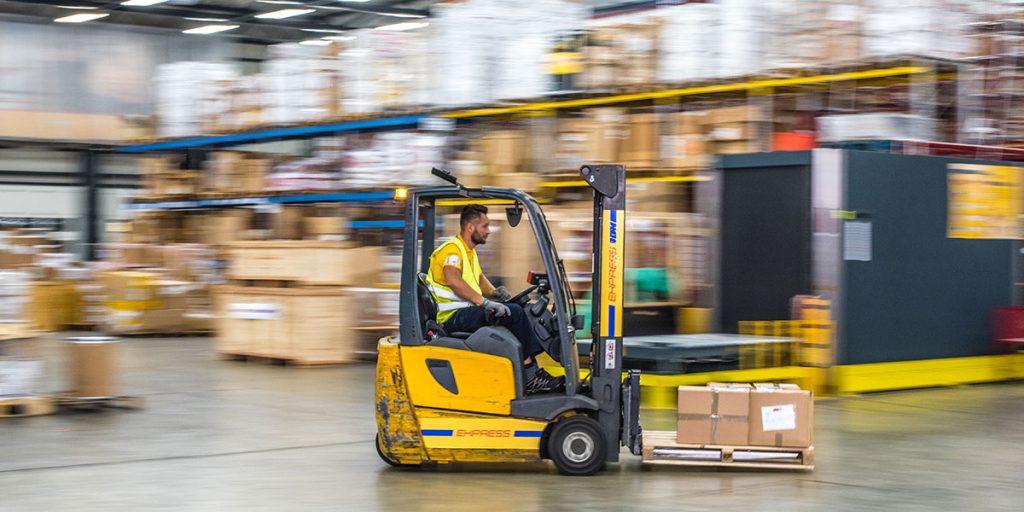
A forklift accident is a workplace accident involving a powered industrial truck used to lift, move, or transport materials.
Forklift accidents can happen in many different ways. An employee may be injured while operating a forklift, walking near one, loading or unloading materials, or working around forklift traffic.
Forklift accidents may involve:
Depending on the circumstances, a forklift accident may qualify as a workplace injury covered by workers’ compensation.
Forklift accidents can happen for many reasons. Some common causes include:
Determining what caused the accident can be important when evaluating a workers’ compensation claim and whether another party may also be responsible.
Forklift accidents can result in serious injuries, including:
A forklift can weigh thousands of pounds, and even a relatively low-speed collision can cause significant injuries.
Forklift accidents can injure more than just the person operating the machine.
An accident may injure:
Forklift Operators
Operators can be injured when a forklift overturns, crashes into an object, loses its load, or otherwise malfunctions.
Warehouse and Factory Workers
Employees working near forklifts can be struck, pinned, or crushed.
Construction Workers
Forklifts and similar equipment are commonly used to move materials at construction sites, creating additional risks for workers nearby.
Delivery and Loading Workers
Employees loading or unloading materials may be injured by forklifts, falling materials, or improperly secured loads.
Other Employees and Visitors
People walking through areas where forklifts are operating may also be injured in a collision.
If you were injured in a forklift accident while performing your job, you may be entitled to workers’ compensation benefits.
Workers’ compensation may provide benefits for medical treatment and lost wages when a qualifying workplace injury prevents you from working.
You may have a workers’ compensation claim whether you were:
You do not need to prove that your employer was negligent in order to receive workers’ compensation.
If you are injured in a forklift accident, consider taking the following steps:
Report the Accident
Tell your employer about the accident as soon as possible and follow your workplace’s accident-reporting procedures. Put all communications to your employer in writing.
Get Medical Attention
Seek medical treatment for your injuries. Tell your medical provider that the injury occurred at work.
Document the Accident
If you are able, take photographs of the forklift, accident scene, equipment, workplace conditions, and your injuries.
Identify Witnesses
Write down the names and contact information of anyone who saw what happened.
Keep Your Records
Keep copies of medical records, medical bills, accident reports, work restrictions, correspondence from the insurance company, and other documents related to your injury.
Speak With a Lawyer
If your employer or its insurance company disputes your injury or workers’ compensation claim, an attorney can help you understand your options.
Depending on the circumstances of your claim, workers’ compensation may provide benefits for:
The benefits available to you will depend on the nature and severity of your injury, your wages, your ability to work, and other factors.
Forklift operators can suffer serious injuries in workplace accidents.
You may be entitled to workers’ compensation if you were operating the forklift as part of your job and were injured in an accident.
For example, you may be injured when:
You may still have a workers’ compensation claim even if you believe you made a mistake that contributed to the accident.
If you were struck by a forklift while working, you may be entitled to workers’ compensation benefits.
Forklift-pedestrian accidents can result in serious injuries, particularly when a worker is struck or pinned between the forklift and another object.
Report the accident, seek medical attention, and document what happened as soon as possible.
If another company or third party contributed to the accident, there may also be additional legal claims to consider.
Being pinned or crushed by a forklift can cause catastrophic injuries.
Crush injuries may involve broken bones, internal injuries, nerve damage, amputations, spinal injuries, or permanent disability.
If you suffered a crush injury at work, seek immediate medical attention. You should also report the accident to your employer and preserve any information that may help establish what happened.
Materials can fall from forklifts when loads are improperly stacked, secured, lifted, or transported.
If you were injured by a falling load while working, your injury may qualify for workers’ compensation.
Depending on the circumstances, it may also be important to determine whether defective equipment, a third-party contractor, another company, or another party contributed to the accident.
A mechanical or manufacturing defect may contribute to a forklift accident.
For example, an accident could involve defective:
If a defective forklift or component caused your injuries, there may be a potential claim against a manufacturer, maintenance company, or another third party in addition to your workers’ compensation claim.
Proper training and safe operation are important when employees are working with powered industrial trucks.
If you were injured because you were inadequately trained or were instructed to operate equipment without appropriate training, you may still be entitled to workers’ compensation.
Workers’ compensation generally does not require you to prove that your employer was negligent before receiving benefits for a qualifying workplace injury.
You do not have to be the forklift operator to suffer a forklift-related workplace injury.
For example, you could be injured while:
If you were injured while performing your job, you may be entitled to workers’ compensation benefits.
You may still be entitled to workers’ compensation even if you believe you made a mistake that contributed to the accident.
If your employer or insurance company is blaming you for the accident, however, you should understand how that may affect your particular claim.
Workers’ compensation generally provides the primary remedy against an employer for qualifying workplace injuries.
However, a forklift accident can sometimes involve another responsible party.
For example, your accident may involve:
If someone other than your employer contributed to your accident, you may have a separate third-party personal injury claim.
If another company or its employee caused your forklift accident, you may have more than one potential legal claim.
Your workers’ compensation claim may provide benefits for medical treatment and lost wages. A separate third-party claim may provide additional damages that are not available through workers’ compensation.
Determining whether a third-party claim exists requires looking at who caused the accident and the relationship between the parties involved.
A denied workers’ compensation claim does not necessarily mean you cannot receive benefits.
An insurance company may dispute whether your injury occurred at work, whether your injury was caused by the accident, or whether you are entitled to certain benefits.
If your claim has been denied, an attorney can review the reason for the denial and explain what options may be available.
There is no set amount for every forklift accident claim.
The value of a workers’ compensation claim can depend on:
If you also have a third-party personal injury claim, additional damages may be available depending on the circumstances.
You should report your workplace forklift accident to your employer in writing as soon as possible.
North Carolina generally requires written notice of an injury by accident to be provided to the employer immediately or as soon as practicable, and generally within 30 days.
Waiting to report your injury can make a workers’ compensation claim more difficult if your employer or insurance company later disputes what happened.
North Carolina generally requires a workers’ compensation claim to be filed within two years after an injury by accident, subject to applicable requirements and exceptions.
Reporting the accident to your employer is not necessarily the same as filing a workers’ compensation claim with the North Carolina Industrial Commission.
If you were injured in a forklift accident, it is important to understand the applicable deadlines rather than waiting until the deadline is approaching.
You may want to speak with a North Carolina workers’ compensation lawyer if:
A lawyer can help determine whether you have a workers’ compensation claim, a third-party claim, or potentially both.


